What Does G2 Software Do? A Practical Guide for Operators
G2 is often described as a review site for business software. But that label doesn’t explain how it functions behind the scenes or why so many companies show up there. For operators evaluating tools, G2 can influence visibility, perception, and even sales velocity. This guide walks through what G2 actually does, how it generates data, and where its influence holds weight-and where it might not. We focus on how the platform operates, how vendors interact with it, and how real teams use it when comparing options. No fluff, no vendor spin-just what you need to know to assess its role in your workflow.
G2 is a platform for software reviews and comparisons. This guide breaks down what G2 actually does, how it works, and where it fits in B2B buying decisions.
G2’s Core Function: Software Discovery and Comparison
G2 serves as a centralized directory where businesses can compare software products using peer reviews, ratings, and category rankings. It covers a wide range of B2B tools across HR, sales, IT, and operations.
The platform combines structured product data such as deployment type, integrations, and pricing models with user-generated content like ratings and written feedback.
- This mix allows operators to filter based on specific criteria, such as company size or use case.
- Unlike general review sites, G2 focuses only on business software, reducing noise but not eliminating potential bias from vendor marketing efforts.
- Its interface supports side-by-side comparisons, making it easier to evaluate tradeoffs between tools that serve similar functions.
For operators, the useful question is not whether G2 is objective. It is whether the page gives enough directional evidence to decide what to inspect next. Treat G2 as a shortlist builder, not a final buying decision.
Use it to find category language, recurring complaints, implementation patterns, and vendors that buyers already compare. Then validate the claims against product documentation, pricing pages, security requirements, and live references before committing budget.
How G2 Collects and Validates Reviews
G2 requires reviewers to verify their identity using a work email address and confirms they are active users of the product they’re rating. The platform sends review requests after detecting engagement with a vendor’s site or trial, but users can also submit reviews directly.
- Each review includes metadata such as job role, department, and company size.
- G2 flags unusual patterns, such as a sudden influx of five-star ratings from a single domain, but does not disclose its full detection rules.
- While this improves credibility, it doesn’t prevent timing bias-vendors often prompt reviews after positive customer interactions, which can inflate scores.
The review workflow matters because anonymous praise is easy to misunderstand. A useful review has context: company size, role, use case, implementation stage, and what the buyer replaced. Reviews without that context are still directional, but they should carry less weight in an operator's evaluation.
When reading G2, look for patterns across multiple reviews rather than one memorable quote. Repeated complaints about onboarding, reporting, integrations, or support are more useful than a single extreme rating.
The G2 Scoring System: What the Numbers Mean
G2 calculates scores using a formula that weights recent reviews more heavily and considers reviewer role and company size. Categories like 'Ease of Use' and 'Customer Support' are scored separately, then combined into an overall index.
These scores determine placement in the G2 Grid, which sorts products into 'Leaders', 'High Performers', 'Contenders', and 'Niche Players'.
- G2 does not publish every ranking detail, so operators should treat review volume and recency as visible signals rather than proven ranking levers.
- A product with steady but low-volume ratings may rank below one with a surge of recent feedback, even if average scores are similar.
- This rewards vendors who actively manage review collection.
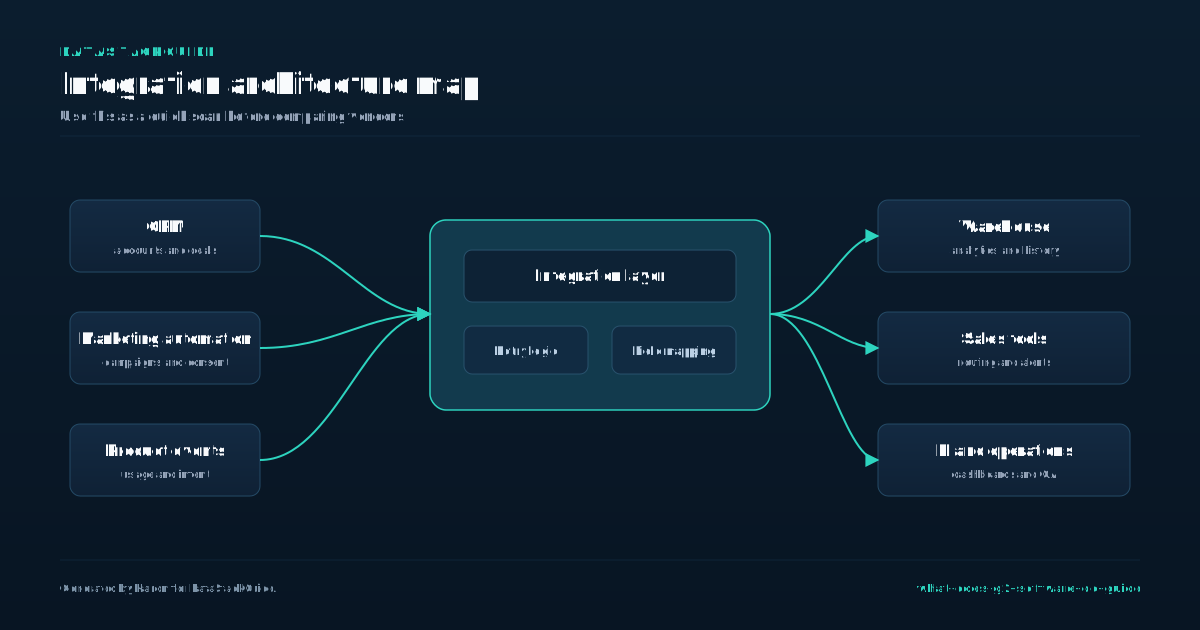
The grid is best read as a market map, not a procurement answer. A leader position can indicate broad adoption and strong review momentum, but it does not prove fit for your data model, budget, security process, or operating constraints.
A niche or high-performer product may still be the better choice if it solves your specific workflow with less overhead. Use scores to decide what deserves a deeper look, then compare the underlying review themes.
Vendor Profiles and Paid Features
Vendors can claim their G2 profile to update product details, respond to reviews, and add content like case studies or demo videos. Basic profile management is free, but G2 offers paid upgrades that increase visibility. These include featured placement in search results, inclusion in buyer intent reports, and promotional banners.
- Vendors cannot pay to alter their review scores or star ratings.
- However, paid features expose their product during high-intent moments, such as when a buyer is comparing options.
- This creates a visibility advantage for vendors with larger marketing budgets, even if their product quality is similar to competitors.
A vendor profile can look more complete because the vendor keeps it current. Screenshots, integration notes, category choices, and review requests all shape how the page reads. Buyers should treat that polish as useful context, not product proof. The next step is to verify the workflow in documentation, demos, and references.
G2’s Role in the B2B Buying Process
Many mid-market and enterprise teams consult G2 during software evaluations, especially when validating claims from sales teams. The platform ranks highly in search results for product-specific queries, making it a common first stop. Operators use G2 to compare peer feedback on usability, support, and reliability.
- However, it rarely serves as the final decision point.
- Teams still rely on hands-on testing, security reviews, and internal stakeholder alignment.
- G2 is most influential when there’s no clear leader in a shortlist or when non-technical stakeholders want reassurance from peer sentiment.
It acts as a checkpoint, not a replacement for due diligence.
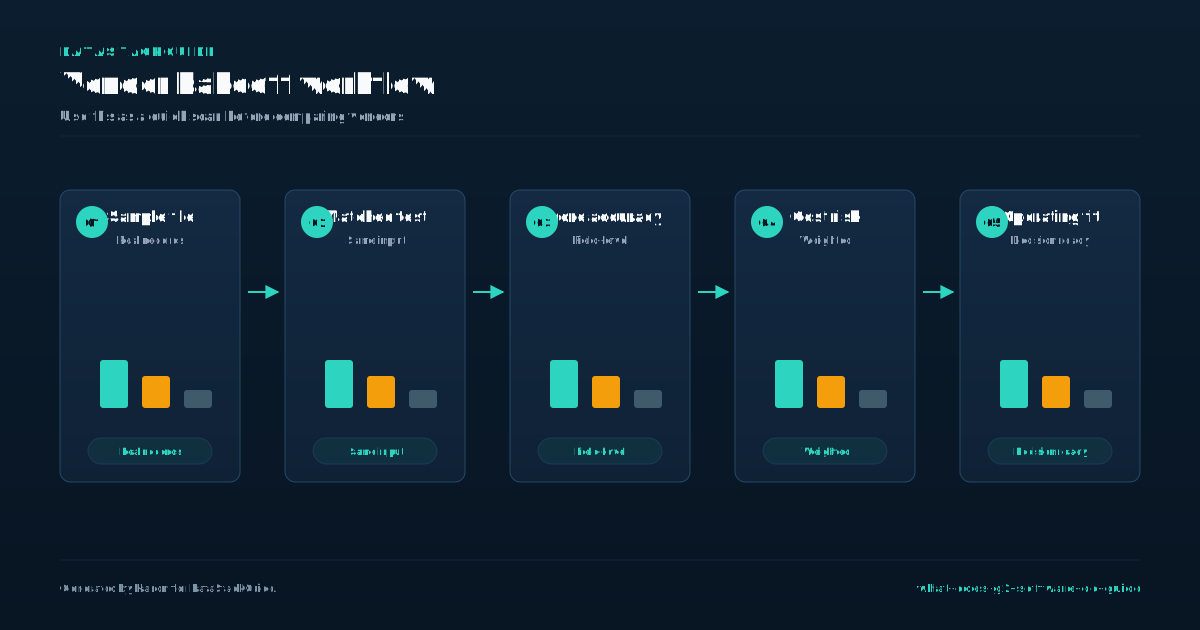
In a real buying process, G2 usually sits near the research and shortlisting stage. It helps teams discover options, compare category claims, and pressure-test vendor narratives before sales calls. It is weaker for final validation because it rarely knows your architecture, procurement rules, or internal adoption risk.
The practical move is to use G2 early, then carry specific questions into demos, trials, reference calls, and contract review.
Limitations of G2 Data for Operators
G2 reviews are self-reported and often reflect short-term experiences. A user might leave feedback right after onboarding, before encountering scalability issues or maintenance overhead. Reviewer roles vary-input from a power user differs from that of an occasional one.
- Some categories have sparse reviews, making comparisons unreliable.
- G2’s scoring doesn’t account for total cost of ownership, API limitations, or internal training load.
- These gaps matter most to operators who manage long-term operations.
Relying solely on G2 can lead to underestimating integration effort or support demands. The platform captures sentiment, not operational reality.
The biggest mistake is treating aggregated review data as clean truth. Reviews are uneven, categories can be broad, and buyer expectations vary by company maturity.
A complaint from a small team may not matter to an enterprise team, and a positive review from a narrow use case may not translate to your workflow. Read G2 with segmentation in mind. Prioritize reviews that resemble your team, systems, and buying constraints.
How Vendors Use G2 for Demand Generation
Vendors treat G2 as both a reputation channel and a lead source. High rankings are used in sales collateral, ads, and outreach emails. Some companies run structured campaigns to encourage satisfied customers to leave reviews, often timed after successful implementations.
- G2 also provides buyer intent data to vendors, showing which companies are researching specific tools.
- This allows for targeted outreach, though it doesn’t confirm actual purchase intent.
- The platform’s data feeds into broader demand strategies, including paid search and account-based marketing.
G2 is not just a review site-it’s part of the vendor’s growth stack.
For vendors, G2 is both a trust surface and a demand signal. A strong profile can support conversion when buyers search independently, while buyer-intent products can help sales teams prioritize outreach. The operational risk is overreacting to the signal.
Intent does not mean readiness to buy, and profile activity does not replace account research. It should inform sequencing, not become the only reason to contact an account.
Alternatives and Complementary Sources
G2 is not the only source for software comparisons. Capterra, TrustRadius, and Software Advice offer similar models with different category strengths. Some operators prefer analyst reports from Gartner or Forrester for deeper technical evaluation, though access can be limited.
- Internal peer networks and industry-specific Slack communities often provide more candid feedback than public reviews.
- Review sites vary in verification rigor and audience focus.
- The most effective evaluations use G2 as one input among others.
Combine it with hands-on testing, reference calls, and technical assessments to reduce risk.
A good research process triangulates. Use G2 to understand peer sentiment and category language, then compare that with vendor documentation, pricing pages, analyst notes, community discussions, and hands-on trials. If those sources disagree, slow down and identify why.
The disagreement may reveal a packaging issue, a support gap, a weak integration, or a mismatch between the category label and what your team actually needs.
That discipline keeps G2 useful without letting the category page overrule your operating reality.
Sources
Frequently Asked Questions
Can companies pay G2 to get better ratings?
No, vendors cannot pay to change their review scores or star ratings. However, they can pay for enhanced profile features, such as increased visibility in search results or promotional placements.
How does G2 verify that reviewers actually use a product?
G2 requires reviewers to sign in with a work email and often confirms usage through third-party data or vendor-reported trial activity. Reviews from unverified users are not published.
Is G2 only for enterprise software?
No, G2 covers software across business sizes, from small business tools to enterprise platforms. Categories range from project management to data integration and cybersecurity.
How often does G2 update its rankings?
Rankings are updated quarterly for major reports, but individual scores and grids adjust continuously as new reviews are verified and added.
Can users compare specific features between tools on G2?
Yes, G2 allows side-by-side comparisons of features, pricing models, and integrations for most listed products, though the depth of detail varies by category.